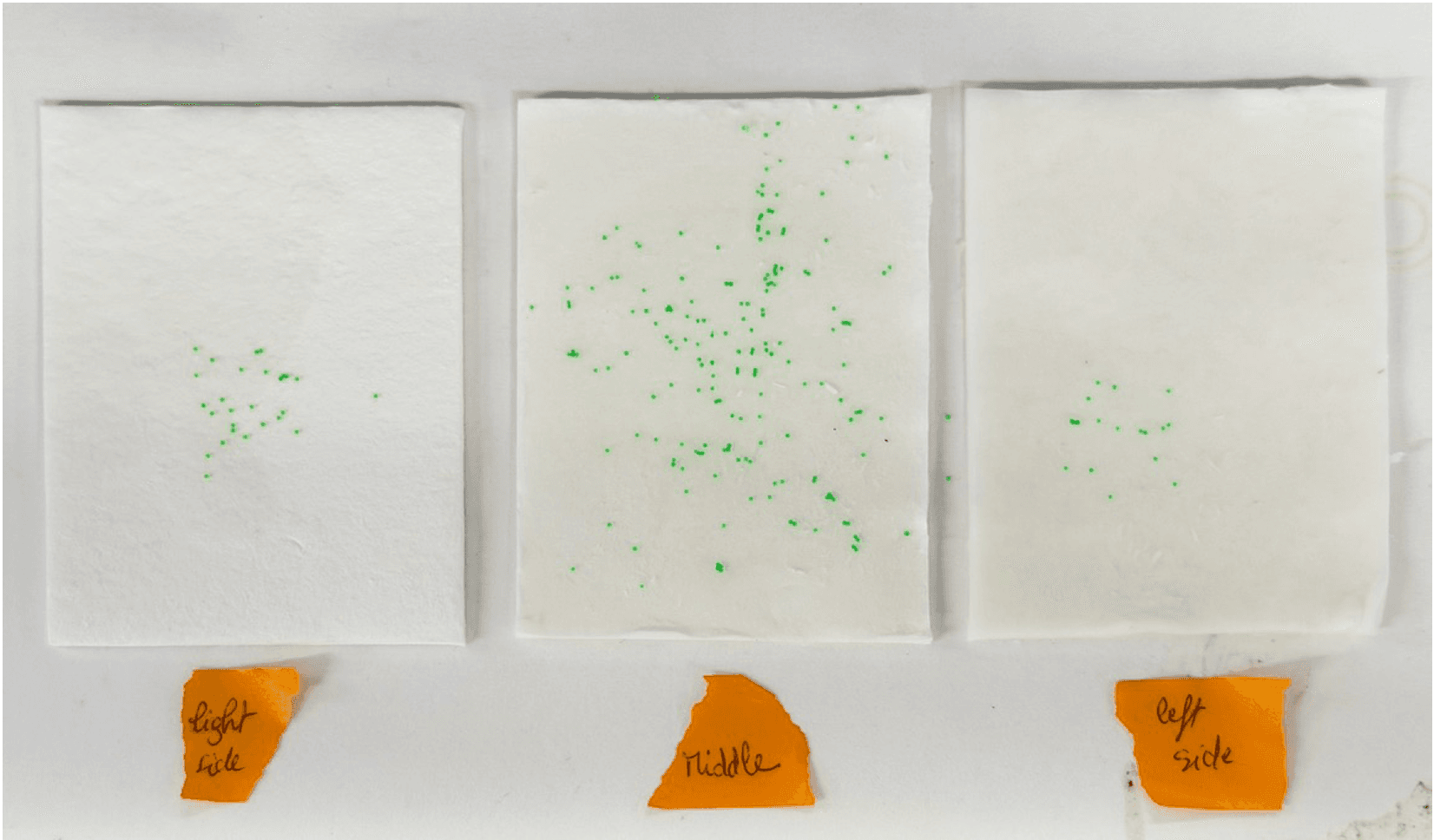
Ultrasonic Microplastic Separation
A resonant acoustic field that sorts microplastics out of contaminated water streams, no filters required.
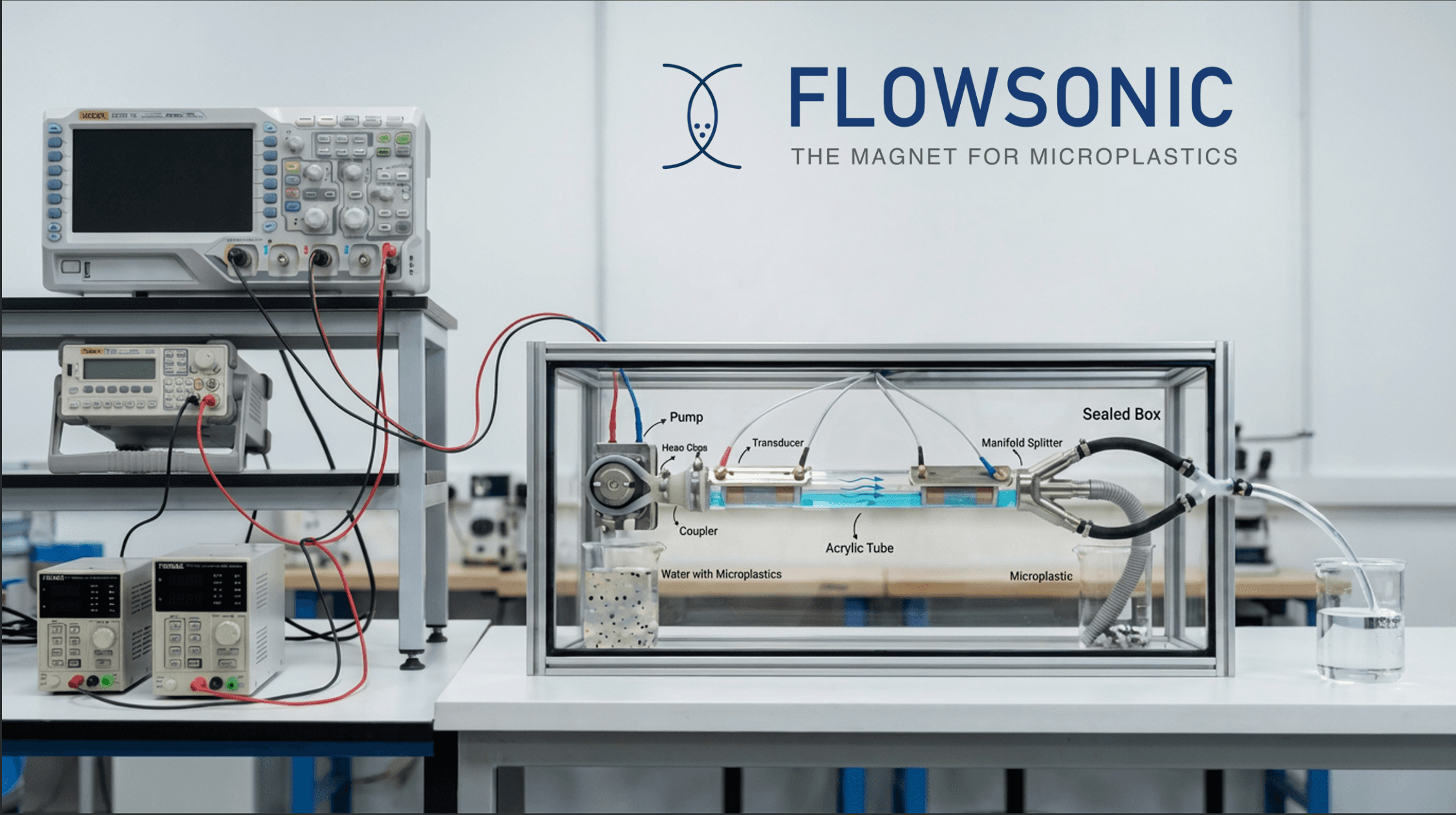
The premise is simple in principle, tricky in practice. A resonant acoustic field in water creates pressure minima where particles migrate by density and size. Tune the transducer, tune the chamber, and microplastics collect along a line that runs the length of the flow. No filters, no consumables, no pressure drop to speak of.
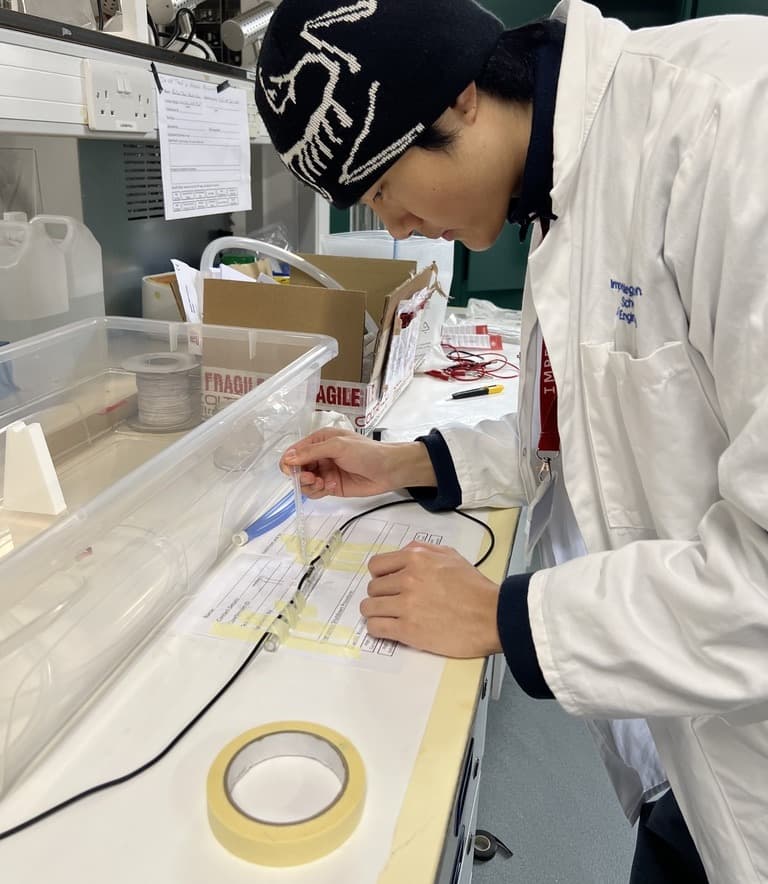
“Acoustic separation isn't slow. It's just patient.”
The MATLAB side models particle migration under the standing-wave pressure field to predict separation efficiency across particle sizes, and to pick a transducer frequency before committing to hardware.
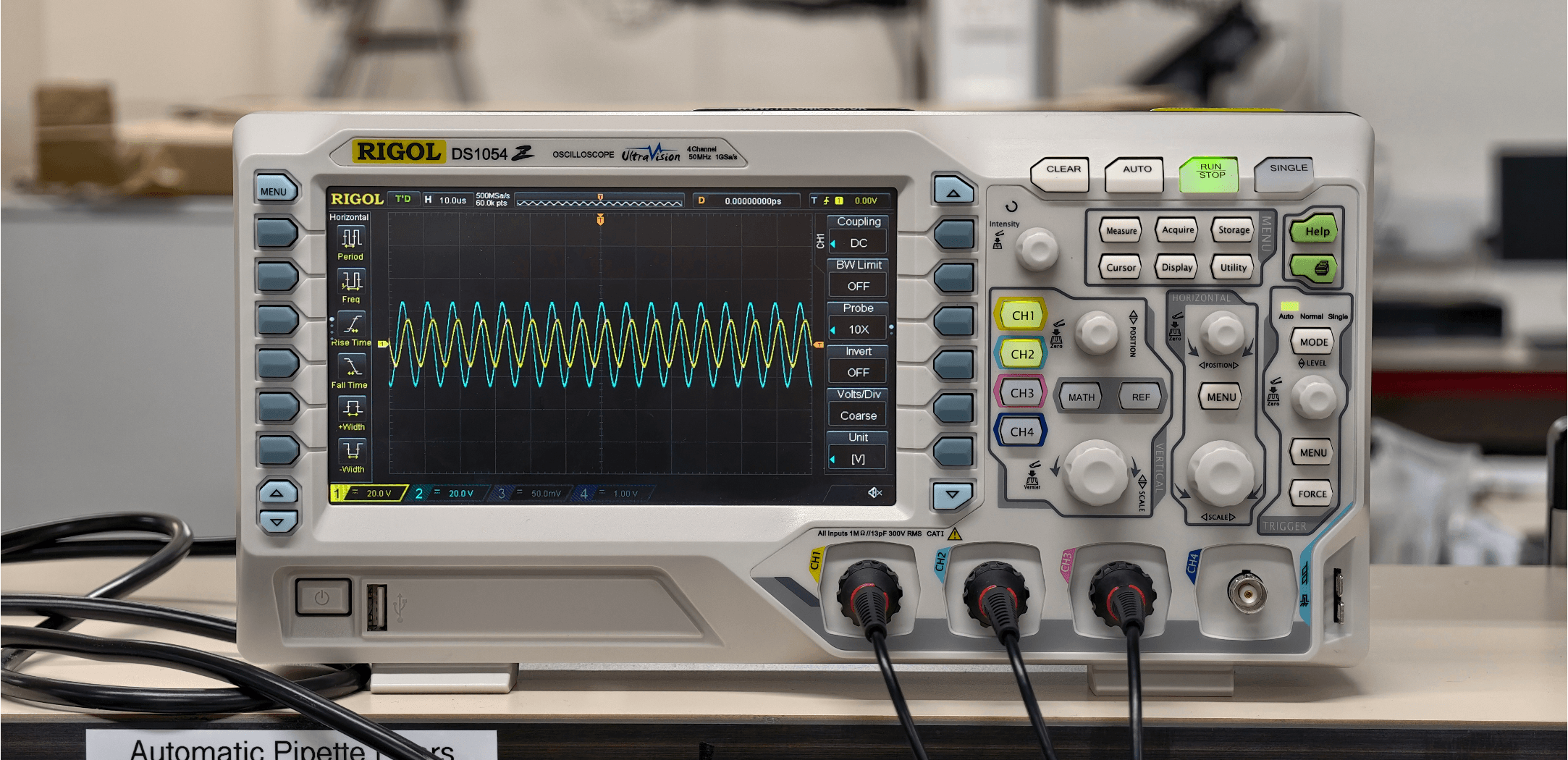
The physical side is where it gets honest: pump clogs on the RS Online M400 cleared with inline filtration, and a transducer impedance mismatch that was quietly killing signal power transfer until it wasn't.